Bend It is a digital networking platform that facilitates connections among soccer players, coaches, FIFA agents, and soccer clubs with the goal of helping create opportunities
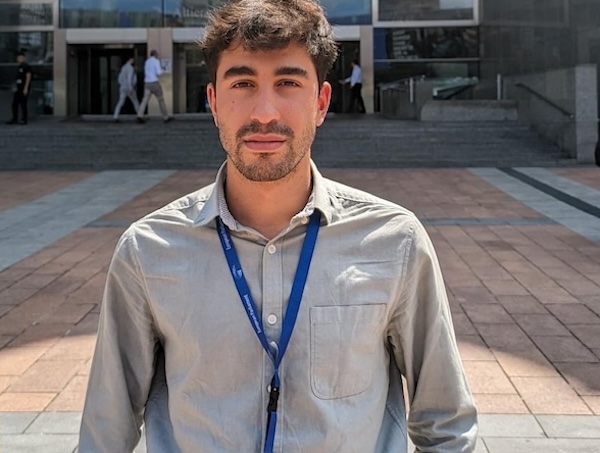
Ever since it was launched in June 2024, Bend It has signed on more than 125 clubs in such diverse countries as Spain, Ghana, Finland, Hong Kong, and Peru. It is a professional space focused on quality over quantity for people aged 15 and older. Arnau tells us about the challenges he’s faced in his project.
- What drove you to found Bend it?
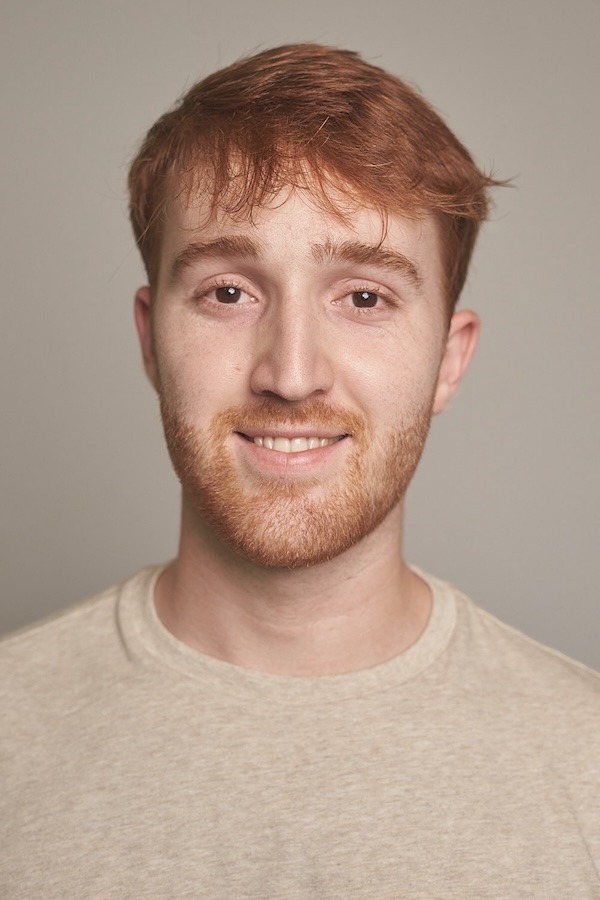 Bend It was founded in January 2023 as a simple idea for my bachelor’s degree final project at Esade. I had spent the previous months in Vancouver, where I had the incredible opportunity to delve into the American startup ecosystem, and I was fascinated. When I came back to Barcelona, I knew that sooner or later I wanted to start my own company, and the bachelor’s degree final project – in which I had to come up with a business plan for a new company – was the perfect starting point.
What really pushed me to create Bend It was my own experience as a soccer player. I experienced soccer firsthand from age four to 23, like many children who dream about going professional but don’t quite make it. Beyond that dream, what drove me to drop everything and found Bend It was the sense that I wasn’t sure how far I would have gotten if I’d had better contacts, better preparation, better tools… (and yes, better luck, which is an extremely important factor). That existential doubt – not knowing what my true potential would have been – was the engine driving all of this.
- Could you tell us what Bend It is and its main value proposition?
Bend It is a digital networking platform that facilitates connections between soccer players, coaches, FIFA agents, and soccer clubs with the goal of helping create opportunities.
We launched the first version of Bend It in June 2024, and we now have more than 125 soccer clubs in countries like Spain, Finland, Romania, Lithuania, Kosovo, Hong Kong, the United States, the United Arab Emirates, Ghana, Gambia, Nigeria, and Peru.
Youth, amateur, and even professional soccer are still very traditional sectors in which contacts are everything. A lot of talent is squandered due to a lack of visibility and opportunities.
For soccer players and coaches, Bend It is a space to present themselves professionally to the sector with a painstaking profile where they can upload their own photos and videos. For clubs and agents, it’s a tool that can simplify the scouting and talent detection process. We focus on profiles aged 15 and over, that is, young soccer players and coaches or those looking to play semi-professionally or professionally.
Since day one, I knew that I wanted to avoid the concept of “social media” and build a more professional, exclusive, and high-quality space with verified, professionally presented profiles in order to focus on quality over quantity.
- What was the biggest challenge you’ve faced since you launched Bend It, and how did you overcome it?
I could write volumes on the challenges I’ve faced since I started Bend It… from having to separate from a potential co-founder even before creating the first MVP to pivoting the business model several times to find market validation, or watching as public funding approved months earlier was cancelled. But I would say that the biggest challenge has been personal. Being a solo founder means grappling with constant fears, uncertainty, nerves, and doubts (which still crop up today). And the only way of overcoming them is to keep going.
These feelings are totally normal when you start something like this. The difference is between those who drop out and those who keep going. For me, I’ve experienced tons personal growth since I left Esade to found Bend It a little over two years ago. And I would do it again, hands down. The lessons I’ve learned, the experience, and the contacts I’ve made are much more valuable than any bad thing I’ve experienced along the way. And of course, I am fortunate to have the support of my family, my partner, and my friends, my rocks who have made all of this possible.
- Where do you see Bend It in the next five years?
I’ve learned that your vision evolves, too, both business-wise and personally. I would like Bend It to remain a valuable community for anyone with soccer dreams. I’m not obsessed about it being the biggest or most famous, but I want it to be useful, valuable, and self-sustaining in the middle and long term.
We had our first success story a few months ago: a coach from Girona was hired by the Eastern District FC in Hong Kong, going from training in Catalonia’s first division to Hong Kong’s first division. This leap changed his life. Moments like that are the ones I draw from to keep forging ahead with the project. They are priceless.
- As an Esade alumnus, what skills, knowledge, or contacts that you made during your education were valuable when launching and scaling up Bend It?
My BBA program at Esade gave me a very solid big-picture view that enables me to lead a project like Bend It. The technical skills can be learned on the job, but that big picture is what really makes the difference.
Plus, the semester exchange was a turning point. Living in Vancouver for five months and studying at the University of British Columbia opened my mind. I was able to meet incredible professors and classmates, plus I was able to visit entrepreneurship and innovation ecosystems like San Francisco and Seattle. It was an experience that left a really deep mark on me, which I recall fondly.
- A team is an essential part of a startup. How would you define the working culture at Bend It and what do you look for in the people who join your project?
Our company is unusual. At first I wanted to build a global startup following the VC model (exponential growth with external financing), but over time I decided to use a more “traditional” model focused on profitability and sustainability from the very start. Still, one of the most important lessons I’ve learned is that the team is everything. I always try to surround myself with the best, and with people who are better than me. Over these two and a half years, I’ve had the good luck to work with incredible people who have made it possible for Bend It to exist: from the tech team to the marketing team to the law firm that advises us.
What I value the most is that they are good people and very good at what they do. It sounds like a cliché, but it isn’t. When you find that type of people, you know it immediately. And then your responsibility is to attract them and offer them a project that motivates them enough to get involved. So far, I feel lucky with all the people that have been part of this journey. It wouldn’t have been possible without them.
- How do you manage your time and energy as a founder, and what leadership principles do you apply to motivate your team and keep yourself focused on your strategic goals?
I’ve had to learn how to manage both my time and my energy. I’ve always been a really hardworking person who is hard on himself, but I’ve also learned that you are not your project. Your life also includes other things: family, partner, friends, hobbies. I’ve had to give up many things – like leaving my soccer team – due to a lack of time, since I’ve personally met with over 150 clubs in the past year. But this is the path I’ve chosen. Still, I think that taking care of yourself is essential. Staying in touch with friends, communicating and sharing the journey with your family or partner, and continuing to work out (even if just individually) have helped me to be well and perform better.
Regarding leadership, I like the team to have a voice of their own. I give them room to work, make mistakes, and offer suggestions. Why bother surrounding yourself with the best if you don’t listen to them? I prefer to set them free, but with clear goals and timeframes so that we’re all aligned. I also try to share the good and bad times with them. I think that this strengthens commitment and makes them see the real impact of their actions in the project and in our users.
Personally, I pay close attention to details and always try to keep abreast of the more specific aspects of the business (product, sales, legal issues, finances, etc.). Without a clear picture of what is happening day to day, it’s impossible to make good long-term decisions.
- What is the best tip you could give alumni who are considering launching their own startup based on your experience?
I’m not much of a fan of giving advice because I think every person has their own circumstances, but there are a few things I’d like to share:
· Choose your co-founders well. This relationship is like a marriage. At good times things are great, but you really get to know the other person when problems arise. Choosing your travelling companion well will determine the future of your project. To me, it is the most important decision or bedrock.
· Be humble and keep an open mind. You’ll begin with an idea that solves a problem, but this idea is almost certain to change. Companies like YouTube, Twitter, and even Bend It have pivoted at some point. The important thing is paying attention to the market, listening to users, and adapting quicky. Accept that you may have been wrong or your idea wasn’t as great as you thought. Don’t be too enamored with your initial idea.
· Listen to your gut. I’m not quite sure how to define it, but I think we all have an inner compass that is usually right (or at least that’s how I see is based on my experience). Listen to others but make your own decisions. If you’re wrong, at least you’ll know that it was your decision (and you’ll feel at peace with it). Being faithful to your own standards and the way you think is what makes you unique.