How can a technology initiative with social impact be transformed into a sustainable business model? This is the challenge that has guided the 2026 edition of Designing Opportunities
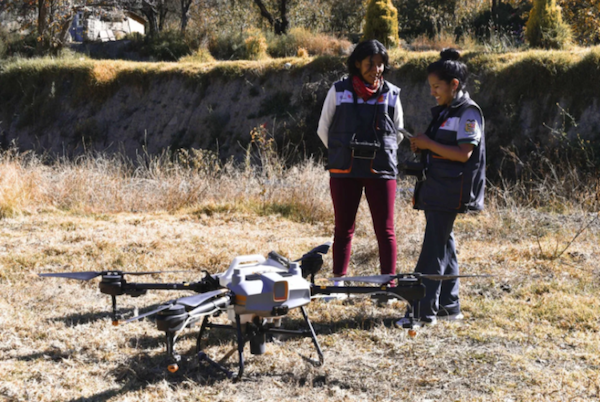
Designing Opportunities is the program promoted by Esade Alumni and Ayuda en Acción that connects talent, knowledge, and social commitment to generate innovative business solutions together with local communities in vulnerable contexts. This year, the focus has been on strengthening the commercialization of agricultural drone services led by women in rural environments, combining technology, female leadership, and social innovation.
Ayuda en Acción has been working in Bolivia since 1990, promoting comprehensive rural development based on a rights-based approach, sustainability, and gender equity. In this context, it drives the Flying Opportunities (FO) network, which leverages the use of agricultural drones to create employment for women and contribute to the economic and environmental development of rural communities.
Within this framework, Aviadoras del Futuro (AVIF) was created—a collective of young rural women from seven municipalities in the departments of Potosí and Chuquisaca. Through this project, these women were trained as agricultural drone pilots with Somos Dron, obtaining the first officially certified UAS qualifications in Bolivia. Today, AVIF consists of seven trained women who offer professional drone services and are consolidating their identity as a growing collective enterprise.
The Future Aviators have a distinctive value proposition: technological innovation applied to agriculture, empowerment of women and youth, and more sustainable, safe, and efficient farming. They offer drone-based aerial spraying services, training and capacity-building, and work in partnership with municipalities, cooperatives, and producer associations. Their impact and trajectory have already gained international visibility and recognition, but they now face a new challenge: transitioning to a solid commercial model.
A real impact
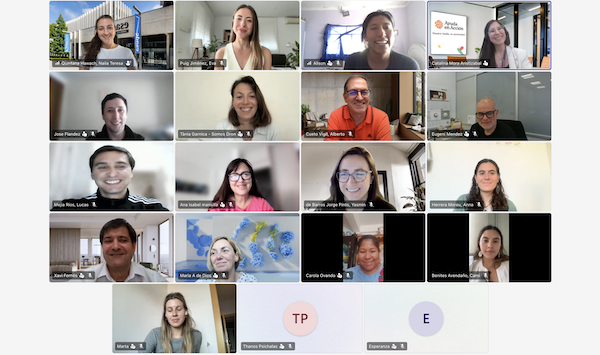
The challenge was aimed at Esade students and alumni from around the world who are committed to social impact, offering them a transformative experience. Participants collaborated in teams, pairs, or individually, combining their skills and professional experience to develop innovative proposals over a two-month period.
In this third edition, 55 members of the Esade community participated, including 33% undergraduate and master’s students. As in previous editions, the diversity of nationalities (49% international) and the youth of participants (33% under the age of 30) stood out.
Participating teams worked on research, ideation, validation, and the development of practical solutions to help AVIF define sustainable pricing, better communicate their services, and explore strategic partnerships in the region.
As Lucas Federico Mejía Ríos, a program participant, explains, “Designing Opportunities is not just a project, but a space where real challenges are addressed, where one learns to deeply understand the people involved, and where solutions are developed through collaboration, iteration, and critical thinking.”
For Shelly Shaurya, an alumni participant, working on the AVIF case was an opportunity to connect the Bolivian reality with international models of precision agriculture and drone services developed in countries such as India, Kenya, Malawi, and through networks like Flying Labs.
The experience has been equally enriching for all participating teams. As Andrea Sala highlights, the challenge of supporting AVIF underscored the importance of working with limited information, actively listening to the collective, and building realistic solutions grounded in respect.
Teams designed commercialization proposals adapted to the local context, combining realistic pricing structures, scalable operational models, and roadmaps aimed at generating income from the early stages of the project. All of this with the goal of strengthening AVIF’s economic sustainability without losing its social essence.
Some of the innovative ideas presented include:
- Positioning AVIF as the first collective of rural women certified by the DGAC in southern Bolivia.
- Communicating service efficiency: “what takes 4 days manually, a drone can do in 30 minutes.”
- Prioritizing legal formalization to enable contract signing and service invoicing.
- Generating initial paid success cases to build evidence and market trust.
- Exploring partnerships with municipalities, cooperatives, universities, and agricultural stakeholders.
- Additional ideas included agricultural support packages per season, agreements with municipalities for logistical support, and the generation of agricultural data as a new source of value.
This challenge confirms the potential of innovation to address social challenges and transfer knowledge, supporting rural women who are already transforming agriculture in Bolivia.
Winning Solutions
The proposals presented by the teams after two months of work were evaluated by the AVIF team, Ayuda en Acción in Spain and Bolivia, and the Esade Alumni team. The evaluation criteria included simplicity, economic feasibility, human and local focus, and innovation, with the goal of implementing them in the field with the support of Ayuda en Acción, ensuring real and meaningful impact.
The collective contributions were outstanding, and it is certain that all of them will help enrich the AVIF project and improve the lives of many women and their families.
After the evaluation process, Designing Opportunities 2026 selected four winning proposals for their applicability, frugal approach, and suitability to the rural Bolivian context:
A. Commercialization Strategy and Rural Positioning for AVIF
Group 24 – Xavier Fornés
A strong proposal in economic analysis, market understanding, and local operations, focused on strengthening community adoption through field demonstrations, local partnerships, and territorial communication, prioritizing community trust and pricing models adapted to small rural producers.
B. Seeds of the Air
Group 9 – Arnau Vidal, Alberto Olivas, Marta Vila, Ana Isabel Mansilla, María A. de Dios
The team proposed a hybrid ecosystem combining bio-inputs, agroecological training, and drone services. The proposal seeks to reduce costs for farmers and position AVIF as a key player in regenerative and sustainable agriculture in Bolivia.
C. AVIF – Precision Agriculture with Drones in Hard-to-Reach Areas
Group 13 – Andrea Draper and Alberto Cueto
This proposal presents a value generation model connected to local needs, based on drone operations, data generation, and monetization. It highlights AVIF’s potential to validate agricultural solutions in the field and build partnerships with municipalities, agricultural associations, and companies in the sector.
D. Women Cultivating the Future: Sustainable Agriculture and Training with Social Impact
Group 21 – Eva Puig
A comprehensive proposal focused on building a sustainable commercial model based on agricultural drone services and a future pilot training school. It emphasizes the importance of marketing and partnerships while addressing market analysis, pricing structure, and a growth roadmap for AVIF.
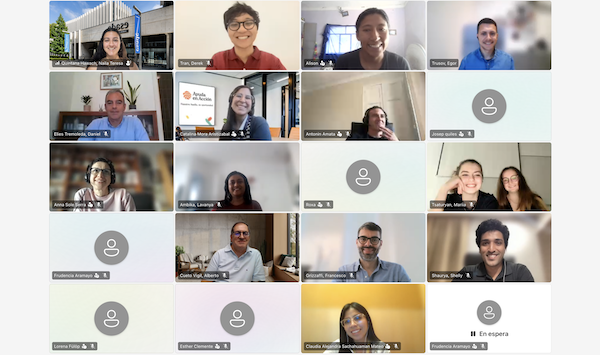
Additionally, we would like to take this opportunity to publicly thank all participants for their effort and for the quality and value of their proposals.
| Aakriti Dasgupta | Alanis Marie Delteil | Alberto Cueto |
| Alberto Olivas | Ana Isabel Mansilla | Ana María Barajuan |
| Ana Maria Sole | Andrea Draper | Andrea Sala |
| Anna Herrera | Antonin Amata | Arnau Vidal |
| Athanasios Psichalas | Brian Kamradt | Claudia Ana Caballero de la Serna |
| Daniel Elies | Daniel Gonzalez | Davide Menini |
| Egor Trusov | Eva Puig | Francesco Grizzaffi |
| Galine Vekilian | Geanfranco Jaz Palomino | Gerard Martorell |
| Hannah Gutternigg | Hong Duc (Derek) Tran | Ignacio Cabrero |
| José Eugenio Méndez | Jose Manuel López | José Miguel Flández |
| Josep Antoni Vila | Josep Quiles | Júlia Castañé |
| Lavanya Ambika | Lorena Andrea Fülöp | Lucas Federico Mejia |
| Marc González | Maria Camila Benites Avendaño | María de los Ángeles de Dios |
| Mariia Tsaturyan | Marta Andrés | Marta Jovanovic |
| Marta María González | Marta Vila | Mercedes Vigário Schneider |
| Neli Iltcheva | Nicole Stump Carsolio | Nora Irene González |
| Oscar Guerrero | Paula Vila | Ricardo Augusto Ramírez Méndez |
| Shelly Shaurya | Violette Perrin | Xavier Fornes |
| Yasmin de Barros Jorge Pinto | | |
Through the collaboration between Esade Alumni, Ayuda en Acción, local communities, and participating teams, the program helps transform the potential of entrepreneurship and technology into real opportunities for rural development.