Lucas Mejia (MBA 22) believes that social impact is not a corporate fad but a family legacy that began in Colombia when he was just eight years old
With solid training in strategy, Lucas Mejia has managed to debunk the myth that the third sector is managed differently than private companies and claims that robust financial and commercial performance is what really enables third-sector organizations to fulfil ambitious social goals. From his pioneering practices at Save the Children to his current work on the ground in Guatemala with the Together for FUNDAP project, his career stands as a testament to coherence and vocation.
- You did your internship in the MBA 22 at Save the Children. What did the third sector teach you about management and strategy at that time?
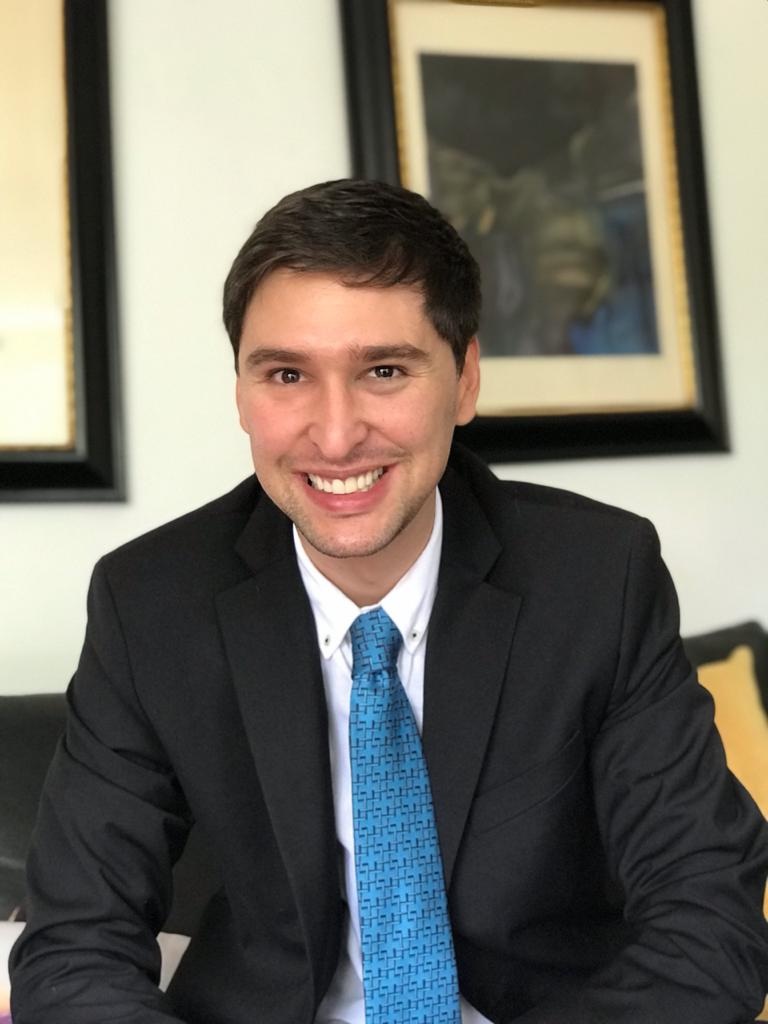 Yes, I was the first MBA student to do my internship at Save the Children. One of the paradigms people believe is that the third sector is managed differently, but after working with Save the Children I realized that it’s exactly the same as a company, except there is no distribution of profits at the end. Third-sector organizations have a more robust corporate governance than many companies, and so from that I learned that a good commercial and financial strategy means that you always have funds to meet your goals, in this case social projects.
- You’ve participated in practically all the Alumni Social initiatives, including Designing Opportunities, Hackathons, Giving-back Consultants, and Together. What are your takeaways from these experiences, and which did you like the most and why?
That’s right, I’ve participated in basically all of them. I learn something from each of them because they’re all very different. The one I liked the most is the one I’m currently in, Together, because three years enables you to see the results of your effort. In the others it’s more in the NGOs’ hands, but it’s still a pleasure to help them. I do this because I think that we should give something back to society whenever we can, and these initiatives make that possible. There is nothing more gratifying than seeing how your ideas help the NGO reach more people that need it. There’s no greater satisfaction than this.
- If you had to choose a single moment when you really felt that you were contributing to changing the reality of a person or an NGO, what would it be?
That’s a difficult question, because I do volunteer work not only with Esade but also in my personal life, and I’ve been doing it from a very young age. But I think it would be when I handed out gifts to the neediest children in an isolated section of Colombia with my grandmother and my entire family. This initiative was started by my grandmother with thirty children when I was eight years old, and today we are still helping around 400 children. My grandmother is no longer around, but her legacy will last forever. I choose this moment because it taught me the values that I have to help others whenever I can.
- You’re in Guatemala with the Together for FUNDAP project. What are the main goals of this trip, and what strikes you about the experience?
I’m in Guatemala right now. The goals are to understand the NGO’s reality, because theoretically we already have the strategy we want to implement, but we have to validate that it can be implemented on the ground. FUNDAP has surprised me; after working on so many projects this is the first NGO that has it all, immense potential, an enviable infrastructure, and all it needs is people like us to help them and guide them to the next level in their project. I was really struck by seeing that when an NGO is organized, the sky is the limit, with plenty of effort, but when you see the results you know it was really worth it.
- How do you combine your facet as a consultant and entrepreneur with this social vocation?
I don’t think you combine them; I’m simply a businessman whose vision is to implement strategies to improve companies’ income. I see NGO’s as companies and I implement the same dynamic in them as in a company, but for a social mission. I find it easy to help NGO’s via my role as a consultant/entrepreneur because it’s what I do every day, I just adjust it for social projects. It doesn’t matter what you have; good corporate governance makes all the difference.
- You have your own consulting company. Do you think it’s possible today to have a company that doesn’t have social impact in its DNA?
I don’t think so. Today corporate social responsibility has to be incorporated into the company, no matter what you do; the world has changed and will continue to change to mitigate the impact on society. We no longer talk about tomorrow but what I can do today to prevent what we have today from no longer existing tomorrow, and for this reason companies have come to understand that we all have to contribute our grain of sand to leave a better future.
- You’re moving to Barcelona in April. What are your goals when you reach the city and how do you think your Esade network can help you in this new professional phase?
That’s right, I’m returning to one of the cities I consider my second home. I’m Colombian-Spanish, so I’ve always felt quite close to Spain. My goals are to be able to continue contributing my knowledge to European and Spanish companies, without setting aside social projects in Latin American and applying it to others in Europe. Esade is famous for its extensive alumni network, which I’ve already used in different ways, and someone has always raised their hand to help me. Its strongest network is in Europe, so I’m sure I’ll be able to find plenty of help in this new professional challenge.
- To conclude, what would you tell other alumni to encourage them to participate in our Alumni Social initiatives?
I would tell them: “Do it.” They shouldn’t think that they don’t have enough time or are too busy for the initiatives. There’s an incredible team behind every project that will make things easier so that participating in initiatives is so pleasant you’re not going to want to stop. I’ve always believed that you have to roll up your sleeves and dive in to change things. Create the change – don’t wait for it to come.